



Packaging Formats
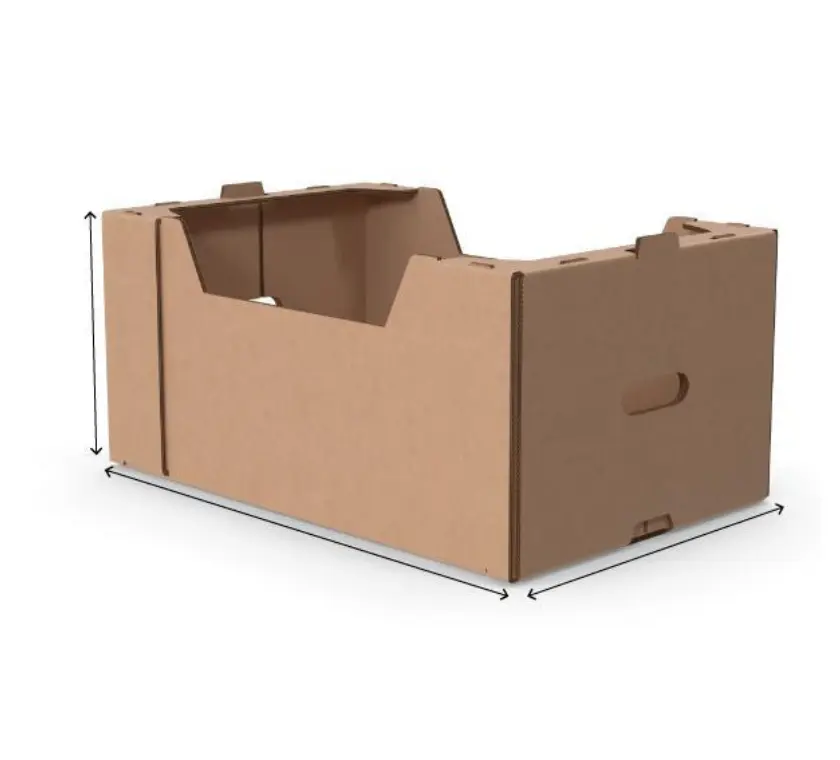
Citrus ships in open-top cartons across standard export weights, with telescopic cartons used for taller, heavier loads. Every format below is a standard packing configuration — custom labelling and private-label packaging can be arranged at time of order.
Open Top Boxes
| Weight | Packaging | Dimensions (mm) |
|---|---|---|
| 1.8 kg | PCB 104/2 | 240 × 200 × 105 |
| 2 kg | PCB 104/5 | 250 × 200 × 106 |
| 2.3 kg | PCB 105 | 290 × 192 × 105 |
| 10 kg | PEG 310 | 440 × 285 × 160 |
| 10 kg | PCR 822 | 440 × 300 × 170 |
| — | PCF 524 | 600 × 400 × 120 |
| 15 kg | PCF 532 | 600 × 400 × 157 |
| 16 kg | PCF 534 | 600 × 400 × 165 |
Telescopic Boxes
| Weight | Packaging | Dimensions (mm) |
|---|---|---|
| 17 kg | CL 828 | 440 × 300 × 275 |
| — | PR 432 | 508 × 406 × 198 |
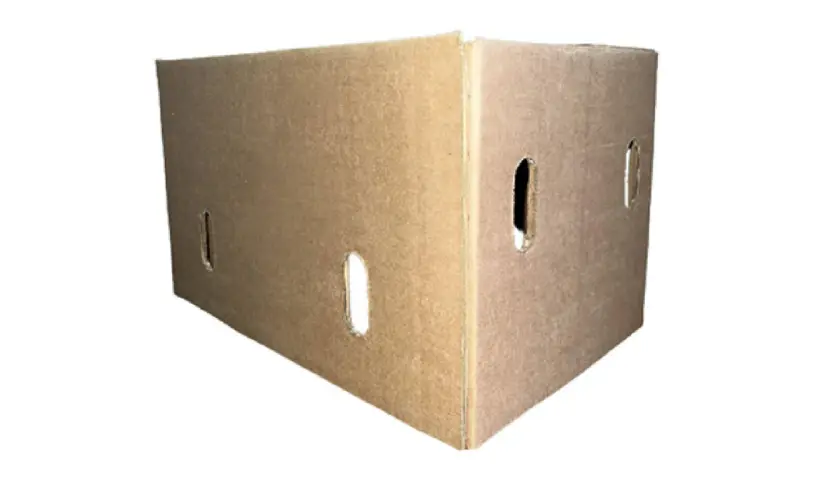
Carton weights and dimensions are standard configurations. Contact us to confirm availability of a specific format for your order.
Palletisation
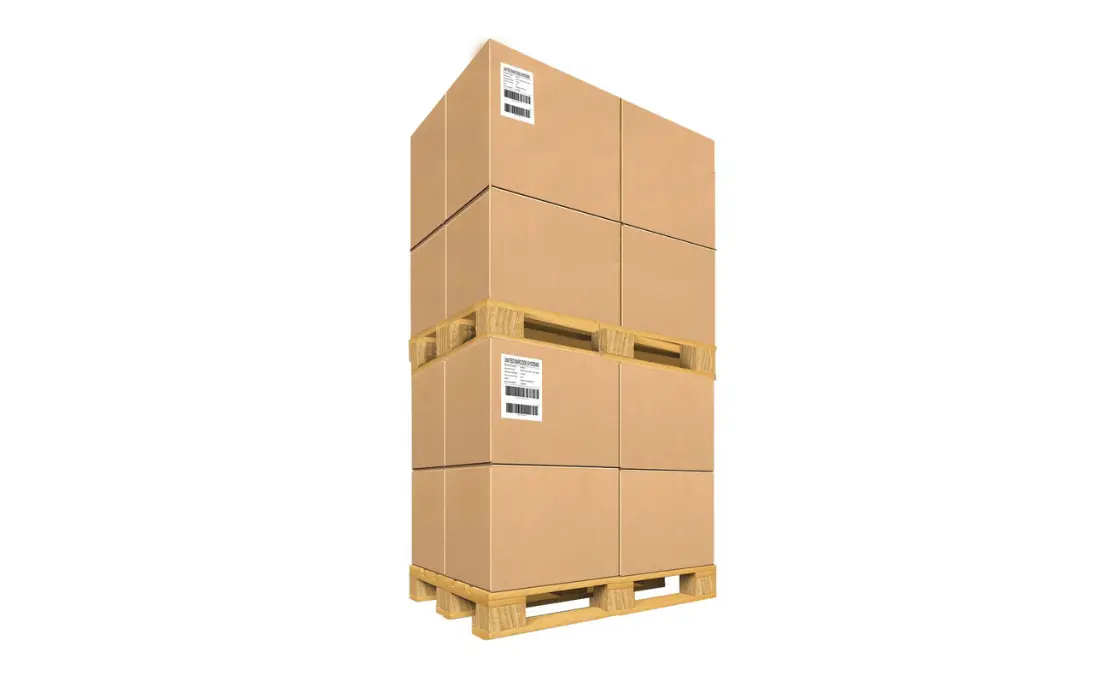
Pallet yields differ by loading method. Container-ship loading achieves higher box counts per pallet than conventional loading across most carton formats — the figures below are per single pallet.
| Packaging | Container Ships | Conventional | ||||
|---|---|---|---|---|---|---|
| Boxes / Pallet | Boxes / Layer | Layers | Boxes / Pallet | Boxes / Layer | Layers | |
| PCB 104/2 | 500 | 25 | 20 | 450 | 25 | 18 |
| PCB 104/5 | 480 | 24 | 20 | 432 | 24 | 18 |
| PCB 105 | 360 | 20 | 18 | 360 | 20 | 18 |
| PCE 822 | 117 | 9 | 13 | 108 | 9 | 12 |
| PCE 219 | 120 | 10 | 12 | 100 | 10 | 10 |
| PCF 524 | 90 | 5 | 18 | 80 | 5 | 16 |
| PCF 532 | 75 | 5 | 15 | 65 | 5 | 13 |
| PCF 534 | 70 | 5 | 14 | 60 | 5 | 12 |
| PCF 535 | 65 | 5 | 13 | 55 | 5 | 11 |
| PR 432 | 66 | 6 | 11 | 60 | 6 | 10 |
| CL 828 | 72 | 9 | 8 | 63 | 9 | 7 |
| PCB 108 | 300 | 20 | 15 | 280 | 20 | 14 |
Figures are per single pallet. Double-pallet handling is available on qualifying loads — see below.
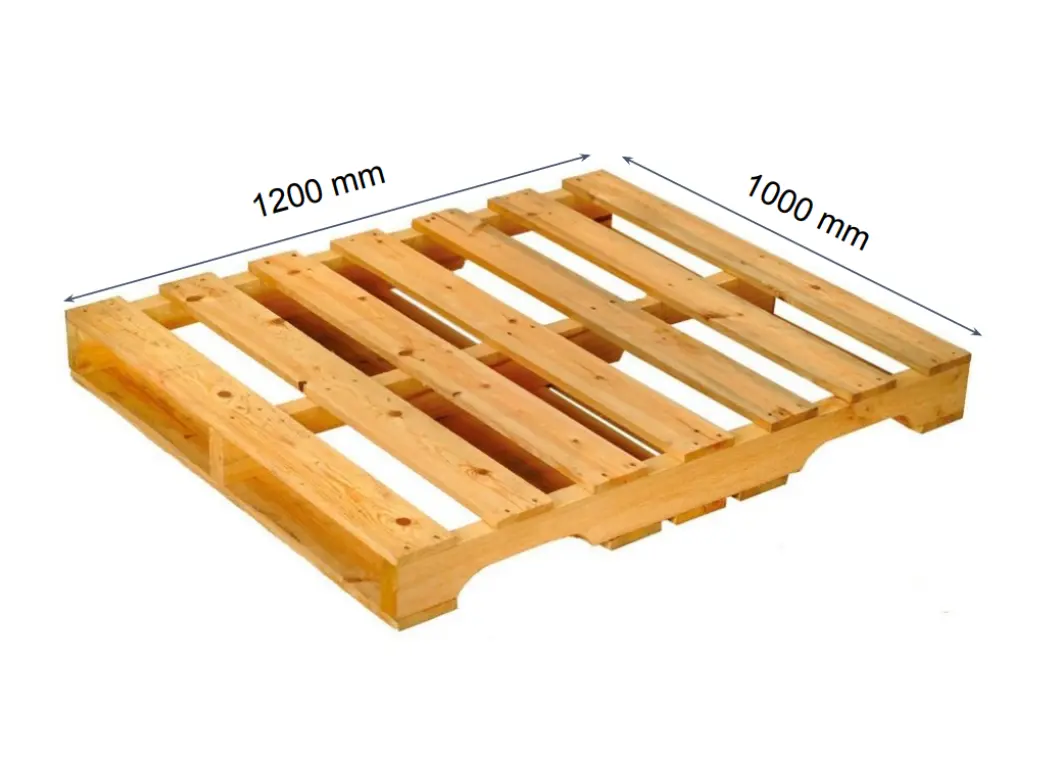
Standard American Pallet
The American pallet — also called a longitudinal beam pallet — is the standard pallet across North America. Its simple structure makes it straightforward to produce and gives it good overall firmness in transit.
- ✓1200 × 1000 mm footprint — the North American standard, compatible with common container and trailer loading patterns.
- ✓Forks on both sides as standard, with good overall structural firmness.
- ✓Four-way fork entry available — the longitudinal beam can be grooved where a buyer needs entry from all sides.
Double Pallet Handling
Double-pallet handling moves two pallets at once rather than one. On qualifying loads that halves the number of internal transport movements, saving both time and cost at the packhouse and at destination.
It also reduces forklift usage and energy consumption, which lowers the overall life-cycle cost of handling equipment. The mobile forks are built so they do not catch on the side rails or the slats of the pallets.
- ✓Two pallets transported simultaneously on qualifying loads.
- ✓Reduced forklift usage and energy consumption, lowering equipment life-cycle cost.
- ✓Purpose-built mobile forks that clear pallet side rails and slats without catching.
Licensing, Compliance & Export Documentation
We work with growers, packhouses, exporters, inspection authorities and logistics providers to coordinate the export documentation each shipment requires — based on the requirements of the destination market.

Blue Book Company #397783
Listed with Blue Book Services, the produce industry’s credit and marketing information service.
View our Blue Book profile →
DRC #5277
Member of the Fruit and Vegetable Dispute Resolution Corporation, which provides trade standards and dispute resolution for the produce industry.
About the DRC →Only credentials held directly by DA Produce Guys are shown here.
Official certificates come from the right authority
Phytosanitary certificates are issued for each shipment by the plant protection authority of the exporting country — for example the Canadian Food Inspection Agency (CFIA) in Canada, USDA APHIS in the United States, or ONSSA in Morocco. DA Produce Guys coordinates the inspection and paperwork with our growers, packhouses and exporters so the right documents travel with every load.
Documentation We Coordinate
Where applicable to the product, origin and destinationPlant Health & Inspection
- Phytosanitary certification
- Inspection documentation
- Cold-treatment documentationwhere required by the destination
Trade & Origin
- Certificates of Origin
- Commercial invoices
- Packing lists
Shipping & Cold Chain
- Bills of Lading
- Temperature records
- Export documentation
Market Requirements
- USDA-related export / import requirements
- CFIA requirements
- Import-market documentation
- Country-specific produce requirements
GCC, Middle East, North Africa & other international markets
For these and other destinations, documentation and phytosanitary requirements are handled according to the requirements of the applicable destination market. Requirements vary by product, origin and destination, and are confirmed for each shipment before loading.
Need documentation for a specific market?
Ask Our Team